
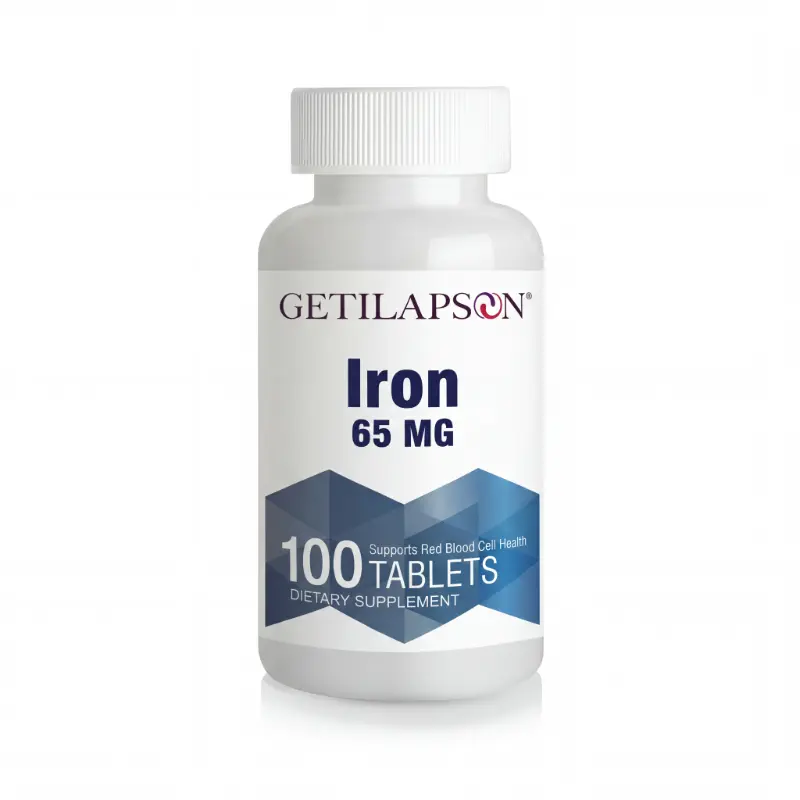
Description
Product Overview
The fundamental physiological role of iron is centered on its function as the coordination center of the heme moiety, facilitating oxygen transport and storage. Approximately 65% of systemic iron is sequestered within hemoglobin (Hb), while roughly 25% is stored as ferritin in the liver and the reticuloendothelial system.
Iron deficiency (ID) occurs when intake fails to meet physiological demands or when losses exceed absorption—most notably in women of reproductive age, who lose an average of 12.5–15 mg of iron per menstrual cycle.
Current clinical diagnostics have shifted from relying solely on hemoglobin levels to a more sensitive reliance on Serum Ferritin (SF). According to World Health Organization (WHO) standards, an SF level <15 μg/L indicates depleted iron stores; however, in clinical practice, a threshold of <30 μg/L is widely recognized as a highly sensitive marker (98% specificity) for iron deficiency.
Modern guidelines emphasize the management of Non-Anemic Iron Deficiency (NAID), focusing on the quantifiable impact of iron depletion on mitochondrial function and cognitive performance even in the absence of clinical anemia.
Specifications and Evidence
1. Maintenance of Hemoglobin Synthesis and Erythropoiesis
The primary therapeutic objective of iron supplementation is the correction of Iron Deficiency Anemia (IDA). Clinical data demonstrate that in IDA patients, the administration of 60–120 mg of elemental iron daily typically induces a rise in reticulocyte counts within 1–2 weeks, followed by an average hemoglobin increase of 1.0–2.0 g/dL every 2–4 weeks.
Achievement of target Hb levels (typically >12.0 g/dL for women and >13.0 g/dL for men) remains the gold standard for evaluating supplemental efficacy.
2. Stratified Management of Serum Ferritin (SF) Levels
The long-term value of iron supplementation lies in the restoration of depleted stores. Research indicates that maintaining SF levels between 30–100 μg/L optimizes the activity of iron-dependent enzymes across various tissues.
A randomized controlled trial involving women of reproductive age showed that when iron supplementation raised SF from a baseline of 15 μg/L to >50 μg/L, the subjects’ aerobic capacity (VO₂ max) improved by approximately 5%–10%, confirming the biological importance of iron beyond erythropoiesis.
Quantitative Improvement in Non-Anemic Iron Deficiency (NAID) and Fatigue
Meta-analyses (e.g., Vaucher et al.) have confirmed that in individuals with normal Hb but low SF (<15 μg/L), iron supplementation significantly reduces unexplained fatigue.
In a 12-week controlled trial, the Fatigue Visual Analogue Scale (VAS) score decreased by an average of 48% in the iron group compared to only 19% in the placebo group. This underscores the necessity of addressing iron’s role in energy metabolism, with the primary outcome being a statistically significant reduction in fatigue (P < 0.001).
Hepcidin-Mediated Regulation and the Alternate-Day Dosing Model
Recent evidence published in The Lancet Haematology has revolutionized oral iron protocols. The ingestion of a single dose of ≥60 mg of elemental iron induces a rise in serum hepcidin levels that persists for 24 hours, subsequently decreasing the absorption of iron the following day by 35%–45%.
Consequently, alternate-day dosing can increase the fractional iron absorption from approximately 7% to 15%–20%. This strategy achieves comparable total iron absorption with significantly lower gastrointestinal oxidative stress.
Maternal-Fetal Outcome Risk Mitigation in Pregnancy
Total iron requirements during pregnancy reach approximately 1000 mg, with third-trimester demands peaking at 6.3 mg/day. Cochrane systematic reviews indicate that prophylactic iron supplementation reduces the risk of maternal anemia (Relative Risk, RR = 0.30) and low birth weight (RR = 0.81).
Data support the administration of 30–60 mg of elemental iron daily for pregnant women with SF <30 μg/L to optimize perinatal outcomes and neonatal neurodevelopment.
Comparative Bioavailability of Elemental Iron Forms
The absorption rate of iron varies significantly by chemical form. Non-heme iron (e.g., ferrous sulfate) has a baseline absorption rate of 2%–20% and is highly susceptible to dietary inhibitors.
Data show that co-administration with 100 mg of Vitamin C can increase non-heme iron absorption by 2–3 times by maintaining the iron in its reduced (Fe²⁺) state.
Conversely, chelated iron (such as ferrous bisglycinate) maintains an absorption rate more than twice that of traditional salts in the presence of phytates, with a 50% lower incidence of gastrointestinal distress.
Gastrointestinal (GI) Adverse Event Profile
Compliance with oral iron therapy is primarily limited by side effects. High-dose iron salts (daily doses >100 mg) are associated with a 30%–40% incidence of nausea, constipation, or epigastric pain.
By utilizing low-dose protocols (<60 mg per dose) or advanced delivery systems, the incidence of adverse events can be reduced to <10%. Quantifying these trade-offs is essential for establishing clinical credibility over anecdotal “gentleness” claims.
Iron Overload Risks and Tolerable Upper Intake Levels (UL)
Unlike other nutrients, the human body lacks an active physiological pathway for iron excretion, making the safety margin critical. The Tolerable Upper Intake Level (UL) for adults is established at 45 mg/day for long-term supplemental use.
If Transferrin Saturation (TSAT) consistently exceeds 45% or SF exceeds 300 μg/L, the risk of oxidative damage via the Fenton reaction increases. Product literature must include risk warnings for individuals with adequate iron stores or hereditary hemochromatosis to comply with hematological safety standards.