

Description
Product Overview
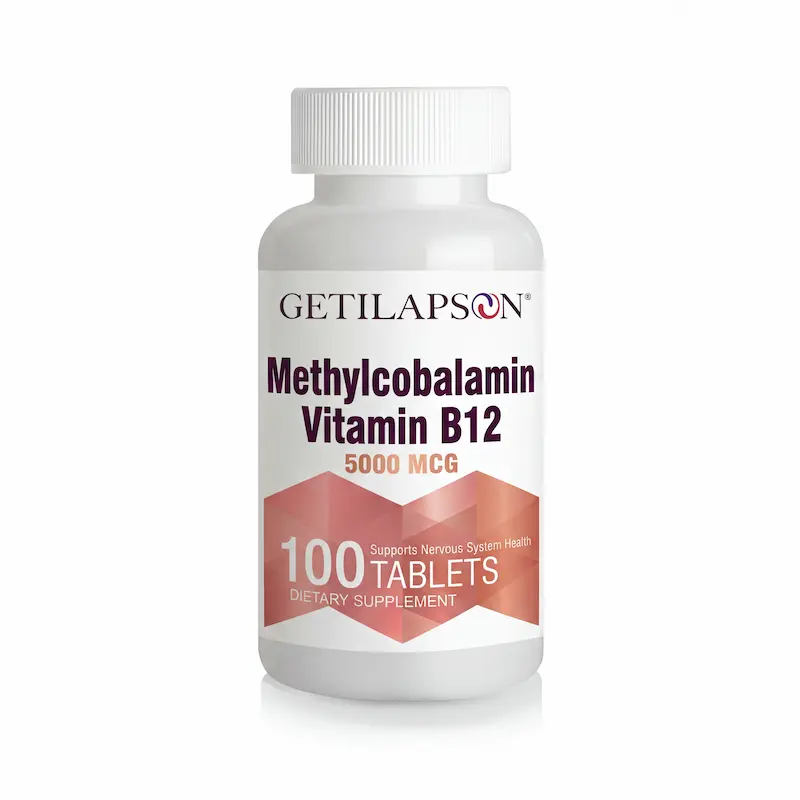
Methylcobalamin is one of the two active coenzyme forms of Vitamin B12 (the other being adenosylcobalamin). Unlike traditional cyanocobalamin, methylcobalamin does not require hepatic biotransformation upon entering the human body and can participate directly in biochemical reactions. Its core biological function is acting as a coenzyme for methionine synthase, catalyzing the conversion of homocysteine (Hcy) to methionine. This process is not only fundamental to DNA synthesis and cell division but also serves as the cornerstone of critical transmethylation reactions within the body.
In clinical and academic literature, research on methylcobalamin has shifted from simply “correcting anemia” to neurological repair and the management of hyperhomocysteinemia. For the general population, a serum Vitamin B12 level below 148 pmol/L (200 pg/mL) is typically defined as a deficiency. Due to its high affinity for and retention within nervous tissue, methylcobalamin holds an indispensable position in the adjunctive treatment of peripheral neuropathies.
Academic research regarding methylcobalamin focuses on four primary dimensions: first, its role as a transmethylation coenzyme in promoting myelin regeneration and axonal repair; second, its ability to lower plasma homocysteine levels to manage cardiovascular and cerebrovascular risks; third, the potential intervention of high-dose administration in neurodegenerative diseases (such as ALS); and fourth, the pharmacokinetic differences in tissue retention and bioavailability compared to traditional cyanocobalamin.
Specifications
1. Role as a Methionine Synthase Coenzyme in the Methylation Cycle
The fundamental biochemical function of methylcobalamin is its participation as a coenzyme in the remethylation of homocysteine to methionine. This pathway is the sole route for clearing the metabolic byproduct homocysteine and generates the vital methyl donor S-adenosylmethionine (SAMe). SAMe is involved in over 100 transmethylation reactions in the body, including DNA methylation, neurotransmitter synthesis, and phospholipid metabolism, which directly dictate cell repair capacity and the stability of gene expression.
2. Promotion of Myelin Regeneration and Axonal Repair Following Peripheral Nerve Injury
In the field of neuroscience, methylcobalamin has been extensively proven to facilitate the recovery of damaged nerve tissue. By enhancing the activity of organelles within neurons, it stimulates protein synthesis within the axon. Clinical meta-analyses have demonstrated that in patients with diabetic peripheral neuropathy (DPN), methylcobalamin supplementation significantly improves nerve conduction velocity (NCV) and alleviates clinical symptoms such as numbness and spontaneous pain, outperforming equal doses of cyanocobalamin.
3. Targeted Intervention for Hyperhomocysteinemia (HHcy)
Elevated plasma homocysteine (Hcy) is an independent risk factor for cardiovascular disease, stroke, and cognitive impairment. Methylcobalamin accelerates the remethylation of Hcy via the terminal stage of the folate cycle. Multiple randomized controlled trials (RCTs) have confirmed that combined supplementation of methylcobalamin with folic acid and Vitamin B6 more effectively lowers Hcy levels caused by MTHFR gene mutations or nutritional deficiencies, thereby protecting vascular endothelial function.
Exploration of High-Dose Methylcobalamin in Neurodegenerative Diseases
In recent years, significant academic breakthroughs regarding methylcobalamin have focused on Amyotrophic Lateral Sclerosis (ALS). According to the results of the JETALS trial published in JAMA Neurology (2022), ultra-high doses (50 mg intramuscular injection) of methylcobalamin significantly slowed the rate of functional decline in patients in the early stages of ALS. This research pushes the application of methylcobalamin from routine nutritional supplementation to the forefront of neuroprotective pharmacology.
Pharmacokinetic Advantages: Direct Activity and High Tissue Affinity
Compared to cyanocobalamin, methylcobalamin offers distinct pharmacokinetic advantages. It does not require decyanation or reduction reactions to exert biological activity. Studies have found that at equivalent oral doses, methylcobalamin exhibits higher retention rates in the body and more readily enters neuronal organelles (such as mitochondria). For elderly populations or those with hepatic impairment or metabolic disorders, the direct use of methylcobalamin bypasses complex internal metabolic conversion steps.
Molecular-Level Intervention in Megaloblastic Anemia
While all forms of Vitamin B12 can be used to treat anemia, methylcobalamin directly facilitates nucleic acid synthesis in red blood cells by resolving the “folate trap.” It restores the impaired developmental process of erythrocytes, converting megaloblasts into normal red blood cells. In clinical practice, for B12 deficiency caused by achlorhydria or lack of intrinsic factor, methylcobalamin combined with intramuscular injection protocols remains the clinical standard for restoring hemoglobin levels.
Biomarkers: Integrated Assessment of Serum B12 and Methylmalonic Acid (MMA)
Evaluating the efficacy of methylcobalamin involves more than just absolute serum B12 values. The academic community recognizes methylmalonic acid (MMA) and homocysteine (Hcy) as more sensitive indicators of whether B12 is sufficient at the tissue level. When B12 is deficient, MMA levels rise. The effect of methylcobalamin supplementation can be precisely quantified by observing the decline in MMA, which is of great significance for identifying early subclinical deficiency.
Safety and High-Dose Tolerability Research
Methylcobalamin has demonstrated an exceptional safety profile in clinical studies. Even in ultra-high-dose research targeting ALS, the incidence of side effects was not significantly different from the placebo group. As a water-soluble vitamin, excess amounts are typically excreted via urine. Current academic consensus holds that methylcobalamin has no clearly defined upper limit of toxicity; however, for the general healthy population, personalized supplementation strategies should be followed based on nutritional assessments rather than pursuing massive doses indiscriminately.