
Description
Overview
Glucosamine and chondroitin have distinct roles in cartilage biology. Glucosamine provides a building block for glycosaminoglycans, complex molecules that contribute to connective tissue structure. Chondroitin sulfate occurs naturally in cartilage, where it contributes to hydration and resistance to compression. These biological roles underpin scientific interest in their combined use for joint care.
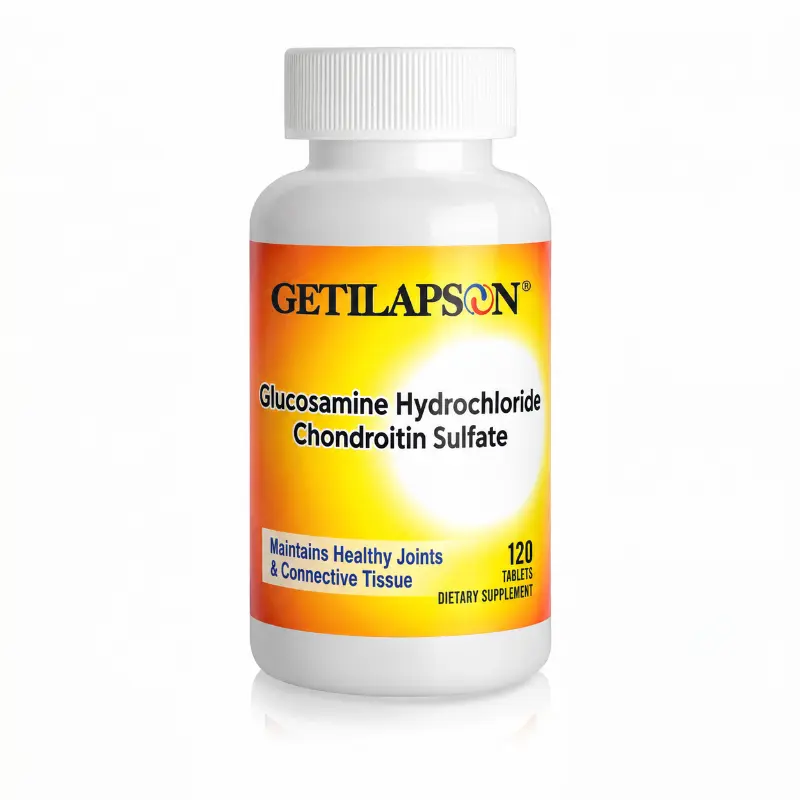
Getilapson combines these ingredients in a formula centered on adult joint care. Its clearly stated ingredient forms make the composition straightforward to understand. The two-tablet serving fits into a regular meal schedule, with the option to divide the daily intake between two meals.
Scientific interest in this combination extends from cartilage structure to joint comfort, stiffness, and physical function. Human studies have examined specific preparations over several months. Findings vary across trials, so the tested formulation and study population matter when interpreting potential benefits. The studies discussed here evaluated research preparations, not the Getilapson finished product.
1. Glucosamine and Cartilage Structure
Glucosamine is an amino sugar involved in cartilage-related biosynthetic pathways. It serves as a precursor for glycosaminoglycans, which form part of the matrix surrounding cartilage cells. This biological role connects glucosamine with connective tissue composition and explains its longstanding investigation as an ingredient in joint-focused formulations.
2. Chondroitin and Cartilage Hydration
Chondroitin sulfate forms part of cartilage proteoglycans, including aggrecan. Charged glycosaminoglycan chains interact with water, helping create a hydrated tissue matrix. Studies into aggrecan mechanics show how these molecular interactions contribute to cartilage behavior under compression. This water-rich structure is central to cartilage resilience during joint loading.
3. Joint Comfort and Physical Function
In adults with knee osteoarthritis, MOVES reported symptom improvements with a specific combination in an active-comparator trial without a placebo group. The larger placebo-controlled GAIT trial found no significant overall benefit for the combination. These contrasting findings make formulation-specific evidence important when considering joint comfort and physical function.
4. Research Into Inflammatory Markers
An exploratory crossover trial studied glucosamine hydrochloride with chondroitin sulfate in 18 healthy overweight adults. C-reactive protein was lower after 28 days compared with placebo, while most other measured biomarkers showed no significant change. These preliminary findings concern biological markers and do not establish an anti-inflammatory benefit for this product.
5. Clearly Defined Ingredient Forms
Each daily serving combines 1,500 mg glucosamine hydrochloride with 1,200 mg chondroitin sulfate sodium. These amounts match daily intakes evaluated in GAIT and MOVES. Research involving prescription crystalline glucosamine sulfate addresses a different preparation and should be distinguished from studies involving glucosamine hydrochloride.
6. Convenient Daily Use
Adults take two tablets together with a meal, or one tablet twice daily with meals. Each bottle contains 120 tablets, providing a 60-day supply at the suggested intake. Both dosing options deliver the same daily amounts, allowing the schedule to fit individual meal routines.