

Description
Overview
Calcium is the most abundant mineral in the human body, with more than $99\%$ of it deposited in the bones and teeth in the form of hydroxyapatite ($Ca_{10}(PO_4)_6(OH)_2$), providing essential mechanical strength. The remaining approximately $1\%$ of calcium exists in ionic form ($Ca^{2+}$) within the blood and extracellular fluid, strictly maintained within a narrow homeostatic range of $2.10$ to $2.55$ $mmol/L$. As a core second messenger, calcium ions regulate almost all critical physiological processes, from myocardial contraction and neurotransmitter release to blood coagulation. When dietary intake is insufficient, the body upregulates parathyroid hormone (PTH) levels—typically by more than $20\%$—to mobilize calcium from the bones into the bloodstream, a process that leads to bone remodeling imbalance over time.
In academic and clinical nutrition circles, the focus of calcium research has shifted from simple “deficiency correction” to “precision mineralization and systemic safety management.” For individuals over the age of 50, while total serum calcium may remain normal, the rate of bone mineral density (BMD) loss serves as the core indicator of calcium metabolic status. The 2025 global bone health consensus emphasizes that calcium supplementation should not only fill the daily intake gap of approximately $800$ to $1200$ $mg$ but must also account for the saturated absorption kinetics in the intestine and the risk of unintended deposition in vascular walls.
Current academic research on calcium is concentrated in four dimensions: first, the differences in bioavailability among various chemical chelated forms (such as calcium carbonate, calcium citrate, and milk calcium) during transmembrane transport; second, the targeted transport of calcium ions to the bone matrix through the “Calcium-D3-K2” triple axis; third, the quantitative assessment of relative risk (RR) reduction for hip and spinal fractures in high-risk groups (such as postmenopausal women and the elderly); and fourth, the safety boundaries regarding high-dose supplementation and the formation of vascular calcification or kidney stones.
1. Satiety Effect of Intestinal Transporters and Segmented Absorption Kinetics
The bioavailability of calcium is limited by the transport capacity of intestinal epithelial cells. Research confirms that active intestinal calcium transport is primarily achieved through TRPV6 channels, which reach a point of satiety when a single dose hits $500$ $mg$. Clinical pharmacokinetic data show that the absorption rate of a single $500$ $mg$ dose is approximately $30\%$, whereas doubling the dose to $1000$ $mg$ causes the absorption rate to plunge below $15\%$. Consequently, the scientifically accepted method of supplementation is divided dosing to maintain stable fluctuations in blood calcium levels and maximize utilization, while avoiding constipation caused by unabsorbed calcium binding with fatty acids in the gut.
2. Impact of Chemical Properties on Gastric Acid Dependency and Utilization
Significant differences exist in the solubility and metabolic pathways of different calcium forms. Calcium carbonate contains up to $40\%$ elemental calcium but is highly dependent on gastric acid for dissolution; in subjects with achlorhydria (pH > 5.0), its bioavailability is approximately $50\%$ lower than in healthy individuals. In contrast, while calcium citrate contains only $21\%$ elemental calcium, its dissolution is independent of gastric acid, and multiple randomized controlled trials have shown a $20\%$ to $27\%$ absorption advantage over calcium carbonate. For the elderly or those using proton pump inhibitors (PPIs), selecting organic acid calcium forms can significantly improve mineral bioavailability.
3. Osteocalcin Carboxylation and Targeted Deposition Regulated by Vitamin K2
Precise targeting of calcium ions is a central theme in modern osteology. Vitamin K2 (specifically the MK-7 form) acts as a coenzyme for $Gla$ proteins, activating osteocalcin through carboxylation, which allows calcium ions to bind firmly to the collagen in the bones. A 2025 clinical observation found that supplementing $180$ $\mu g$ of MK-7 alongside $1000$ $mg$ of calcium daily reduced levels of undercarboxylated osteocalcin (ucOC) in the circulation by $45\%$. This mechanism not only enhances bone quality but, more importantly, activates matrix $Gla$ protein to prevent calcium deposition in soft tissues like the aorta, circumventing the “calcium paradox” at the molecular level.
Quantitative Evidence for Reduced Relative Risk (RR) of Fractures
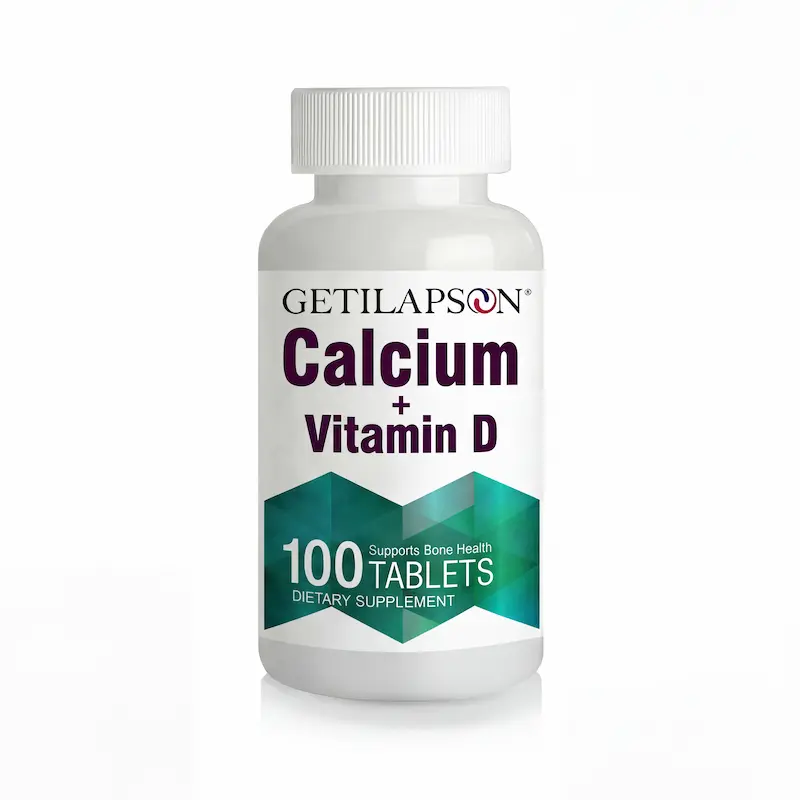
The combined supplementation of calcium and Vitamin D has clear evidence-based support in preventing fragility fractures. A large-scale meta-analysis of individuals over 50 showed that maintaining adequate calcium intake can reduce the total fracture risk by approximately $15\%$, while for elderly residents in care facilities, the risk of hip fractures can be reduced by up to $30\%$. Data indicate that for every year of calcium supplementation, BMD in the lumbar spine and femoral neck increases by an average of $0.7\%$ to $1.2\%$ compared to control groups. This modest density increase significantly reduces the incidence of fractures following a fall and serves as a standard protocol for primary osteoporosis prevention.
Molecular Intervention and Population Benefits for Preeclampsia in Pregnancy
In obstetrics, calcium supplementation is tasked with preventing severe complications. Based on multiple RCT studies, the World Health Organization (WHO) notes that in pregnant populations with low dietary calcium intake (< 600 mg/d), daily supplementation of $1.5$ to $2.0$ $g$ of elemental calcium can slash the risk of preeclampsia by $52\%$ to $55\%$. The mechanism involves the regulation of smooth muscle cell excitability and a reduction in peripheral vascular resistance. This data supports the critical vascular protective role of calcium during early life development, beyond its role in skeletal construction.
Threshold Control of Neuromuscular Excitability by Ionized Calcium ($iCa^{2+}$)
Free ionized calcium ($iCa^{2+}$) in the blood is the core for maintaining nerve impulse conduction. When $iCa^{2+}$ concentration drops below $1.1$ $mmol/L$ due to insufficient intake or metabolic disorders, the permeability of nerve axons to sodium ions increases abnormally, lowering the threshold for action potential triggers. This manifests clinically as neuromuscular hyperexcitability, leading to typical gastrocnemius muscle cramps or tetany. Scientifically supplementing calcium to maintain $iCa^{2+}$ homeostasis can significantly improve the nervous system’s resistance to irritability, which is particularly important for maintaining muscle contraction precision during endurance exercise or high-metabolic states.
Cardiovascular Safety Boundaries and Tolerable Upper Intake Level (UL)
Academic consensus has largely been reached regarding the controversy of calcium supplementation and myocardial infarction risk. According to the Institute of Medicine (IOM) and the latest clinical follow-up data, as long as the total daily calcium intake does not exceed the Tolerable Upper Intake Level (UL) of $2000$ to $2500$ $mg$—and is not taken in a single massive dose—it does not increase the risk of cardiovascular events (HR 1.02, without statistical significance). Safety assessments emphasize that mimicking dietary intake through slow absorption or combining with Vitamin K2 can smooth out blood calcium peaks, ensuring the supplementation process remains within a physiologically safe therapeutic window.
Monitoring Biomarkers: The Shift from Serum Calcium to Bone Turnover Markers
Scientific indicators for evaluating the effectiveness of calcium supplementation no longer rely solely on serum calcium concentration. Because blood calcium is under extremely strict homeostatic control, its value often fails to reflect the true calcium balance in the bones. Modern academic protocols advocate for quantifying the biological effects of calcium by monitoring bone turnover markers, such as the decrease in C-terminal telopeptide of type I collagen (CTX) or changes in bone-specific alkaline phosphatase (BALP). When CTX levels drop by more than $20\%$, it typically signifies that calcium supplementation has successfully inhibited excessive bone resorption and achieved a positive mineral deposition balance.