
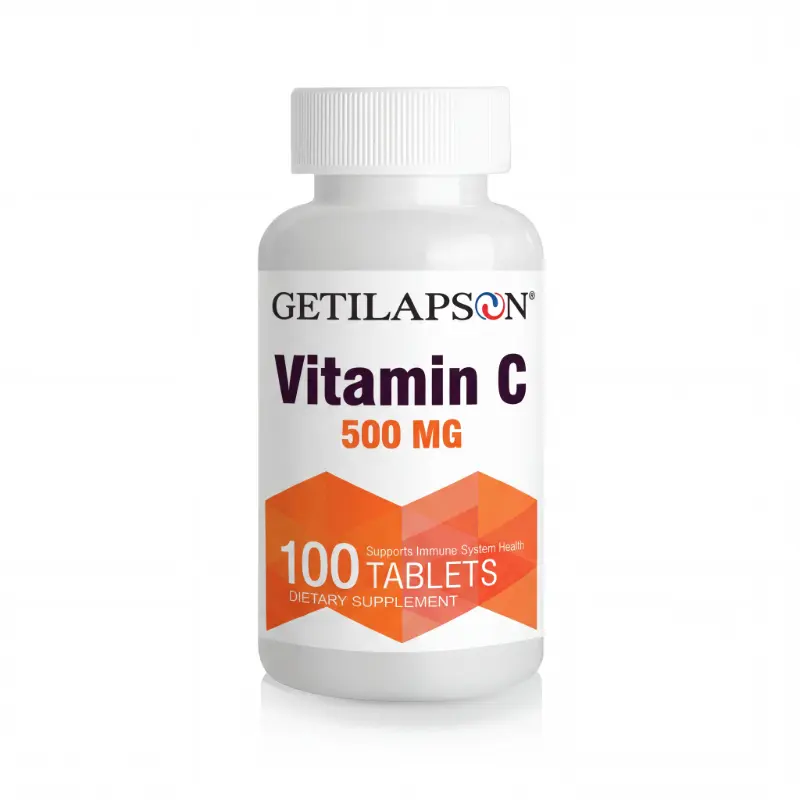
Description
Product Overview
The core biological value of Vitamin C (L-ascorbic acid) lies in its function as a potent reducing agent and an essential cofactor for various dioxygenase enzymes. Beyond its role as a cornerstone of the human water-soluble antioxidant defense system, it serves as a biochemical switch for endogenous collagen stability, catecholamine synthesis, and carnitine metabolism. In clinical nutritional assessment, plasma ascorbate concentration remains the “gold standard” for determining individual status. The academic consensus defines a plasma concentration below $11 \mu mol/L$ ($0.2 mg/dL$) as a clinical deficiency (scurvy threshold), while levels between $11-28 \mu mol/L$ indicate a marginal deficiency. Concentrations exceeding $50 \mu mol/L$ are generally considered necessary to meet basal physiological demands and potentially provide a defensive buffer against chronic disease.
Unlike most micronutrients, Vitamin C exhibits highly specific, non-linear pharmacokinetic characteristics. Its intestinal absorption is strictly regulated by Sodium-Dependent Vitamin C Transporter 1 (SVCT1), which displays a pronounced saturation effect. Consequently, the bioavailability of supplements decreases sharply as the dose increases: while absorption is nearly 100% at a 100 mg dose, it falls below 33% when a single dose reaches 1250 mg, accompanied by a surge in renal excretion. Therefore, contemporary nutritional physiology favors a “physiological window” strategy—utilizing frequent, moderate doses (200–500 mg per serving) to maintain steady-state plasma concentrations within the ideal range of $60-80 \mu mol/L$, rather than relying on high-dose bolus supplementation.
Current academic discourse regarding Vitamin C focuses on four critical dimensions: the maintenance of connective tissue integrity through proline and lysine hydroxylation; the modulation of immune function via neutrophil chemotaxis and lymphocyte proliferation; the synergistic enhancement of non-heme iron absorption through ionic reduction; and the improvement of vasodilation by protecting nitric oxide (NO) bioactivity within endothelial cells. Recent meta-analyses from 2023–2025 further refine its utility in shortening the duration of respiratory infections and providing targeted benefits for populations under extreme oxidative stress, such as chronic smokers or elite athletes.
Specifications
1. Biochemical Driving of Collagen Cross-linking and Structural Integrity
Vitamin C is an irreplaceable biochemical prerequisite for connective tissue remodeling. It serves as a mandatory cofactor for prolyl hydroxylase and lysyl hydroxylase, maintaining the iron atom at the enzyme’s active site in its reduced state Fe rather than the inactive oxidized state Fe. This process is vital for the hydroxylation of proline and lysine residues, which ensures the stability of the collagen molecule’s triple-helix structure. Experimental data indicate that in the absence of ascorbate, the collagen synthesized by fibroblasts exhibits poor thermal stability and is highly susceptible to proteolytic degradation. Clinically, this means Vitamin C is not only essential for skin elasticity and wound healing velocity but is also a fundamental safeguard for vascular wall tensile strength and bone matrix mineralization.
2. SVCT1/2-Mediated Non-linear Absorption and Dosage Optimization
The biological utility of Vitamin C follows a “more is not better” logic, as its bioavailability is capped by the transport threshold of intestinal proteins. According to pharmacokinetic models from the National Institutes of Health (NIH), plasma concentrations do not increase linearly with intake; instead, they follow a sigmoidal saturation curve. When a single oral dose exceeds 400 mg, intestinal absorption efficiency begins to dilute significantly. Academic guidelines, therefore, recommend a science-based supplementation regimen that targets the “physiological saturation point.” For high-stress groups like smokers—whose plasma baselines are typically 40% lower than non-smokers—an additional daily intake of approximately 35 mg is required simply to compensate for the metabolic depletion caused by free radical scavenging.
3. Immune Response Modulation and Respiratory Infection Management
Vitamin C accumulates in white blood cells at concentrations 40 to 80 times higher than those found in plasma, a gradient that supports the high metabolic demands of immune cells during inflammatory responses. A Cochrane systematic review (encompassing 11,306 participants) clarifies that while routine supplementation does not significantly reduce the incidence of the common cold in the general population, it consistently shortens the duration—by 8% in adults and 14% in children—and reduces symptom severity. Crucially, in individuals exposed to extreme physical stress, such as marathon runners or soldiers in sub-arctic training, Vitamin C supplementation reduces the risk of developing a cold by half (Relative Risk = 0.50). This identifies Vitamin C as a “resilience enhancer” rather than a simple preventative drug.
Synergistic Potentiation of Non-Heme Iron Reduction and Conversion
Within dietary structures, Vitamin C is the most potent known enhancer of non-heme iron absorption. It functions through two parallel pathways: reducing dietary $Fe^{3+}$ to the more soluble and transportable $Fe^{2+}$, and forming stable chelates with iron ions in the acidic environment of the stomach to prevent precipitation by phytates or tannins. Research confirms that adding 75 mg of Vitamin C to a meal high in plant-based anti-nutrients can increase iron absorption by approximately 4.14 times. This data is of significant clinical importance for vegetarians, women of childbearing age, and patients with iron-deficiency anemia, establishing Vitamin C as a pivotal auxiliary factor in iron metabolism.
The Redox Cycle and Endogenous Vitamin E Regeneration
Vitamin C does not merely function as an independent antioxidant; it acts as a “charging station” within a multi-component antioxidant network. It donates an electron to the Vitamin E radical (α-tocopheryl radical), regenerating it back into bioactive Vitamin E and creating a linked defense cycle between lipid membranes and the cytoplasm. In dermatological research, this synergy manifests as a robust inhibition of damage induced by ultraviolet (UVA/UVB) radiation. Clinical data show that the combined use of Vitamins C and E increases the threshold for UV-induced skin erythema (redness) by fourfold, providing a biological defense that far exceeds the capabilities of either component used in isolation.
Endothelial Protection and Auxiliary Blood Pressure Regulation
Vitamin C enhances the stability of the cofactor for endothelial nitric oxide synthase (eNOS), thereby protecting nitric oxide (NO) from premature oxidation and maintaining healthy vascular vasodilation. A meta-analysis of 29 randomized controlled trials demonstrated that daily supplementation of 500 mg of Vitamin C significantly lowered systolic blood pressure by an average of 4.85 mmHg and diastolic blood pressure by 1.67 mmHg in hypertensive patients. While these values are not a substitute for first-line antihypertensive medication, they support the role of Vitamin C as a low-risk, biochemically grounded nutritional intervention for managing metabolic syndrome and improving arterial stiffness indices.
Safety Thresholds and Quantitative Monitoring of Oxalate Risk
The metabolic pathway of Vitamin C involves partial conversion to oxalate, which may present risks during high-dose supplementation. Large-scale cohort studies (Relative Risk = 2.00) suggest that men consuming more than 2000 mg of Vitamin C daily face a significantly higher risk of developing calcium oxalate kidney stones. Furthermore, due to its osmotic effect, doses exceeding this limit frequently cause osmotic diarrhea or gastrointestinal distress. Consequently, 2000 mg is established as the Tolerable Upper Intake Level (UL) for adults. Scientific supplementation should focus on maintaining plasma ascorbate within the “golden zone” of $60-90 \mu mol/L$ rather than pursuing excessive, non-physiological dosages.